

What Does It Mean To Be A Christian Leader "In The Arena"?
Being in the arena means doing the hard thing where it costs you something, not commenting on it from a safe distance. For a faith-driven leader, the arena is the ground where your stated convictions meet your actual decisions: in your home, your work, and your culture. Stay in the stands long enough, and you slowly become a stranger to your own beliefs.
Here is the short answer. A Christian leader in the arena has stopped having opinions about hard things and started doing hard things in the rooms God put him in. The arena has three battlefronts: the household, the work, and the culture. It is fought with three weapons: truth, skill, and presence. The stands are anywhere you can be right without risking anything.
This is a manifesto for leaders who are tired of the status quo.
The Arena Versus The Stands: What Is The Difference?
Theodore Roosevelt named the distinction in 1910, in a speech at the Sorbonne titled "Citizenship in a Republic." The line survives because it is true:
"The credit belongs to the man who is actually in the arena, whose face is marred by dust and sweat and blood; who strives valiantly; who errs, who comes short again and again, because there is no effort without error and shortcoming." Theodore Roosevelt, "Citizenship in a Republic," Paris, April 23, 1910
There are two kinds of people in any movement, any company, any church, any culture—the ones in the stands and the ones in the arena. The ones in the stands have opinions. The ones in the arena have scars.

Christian leaders are called to the arena.
Not to the stands of culture-war commentary, where we post at the world from a safe distance. Not to the stands of theological precision, where we critique everyone else's missteps from a seminary chair. Not to the stands of pious distance, where we protect our holiness by refusing to touch anything hard.
The arena is the actual ground where things get built, where things get fought for, where things cost something. That is where you are called.
What Is The Arena For A Faith-Driven Leader?
The arena is the place where your life intersects reality at the points where reality is contested. For most Christian leaders, that intersection happens on three battlefronts. None of them are optional.
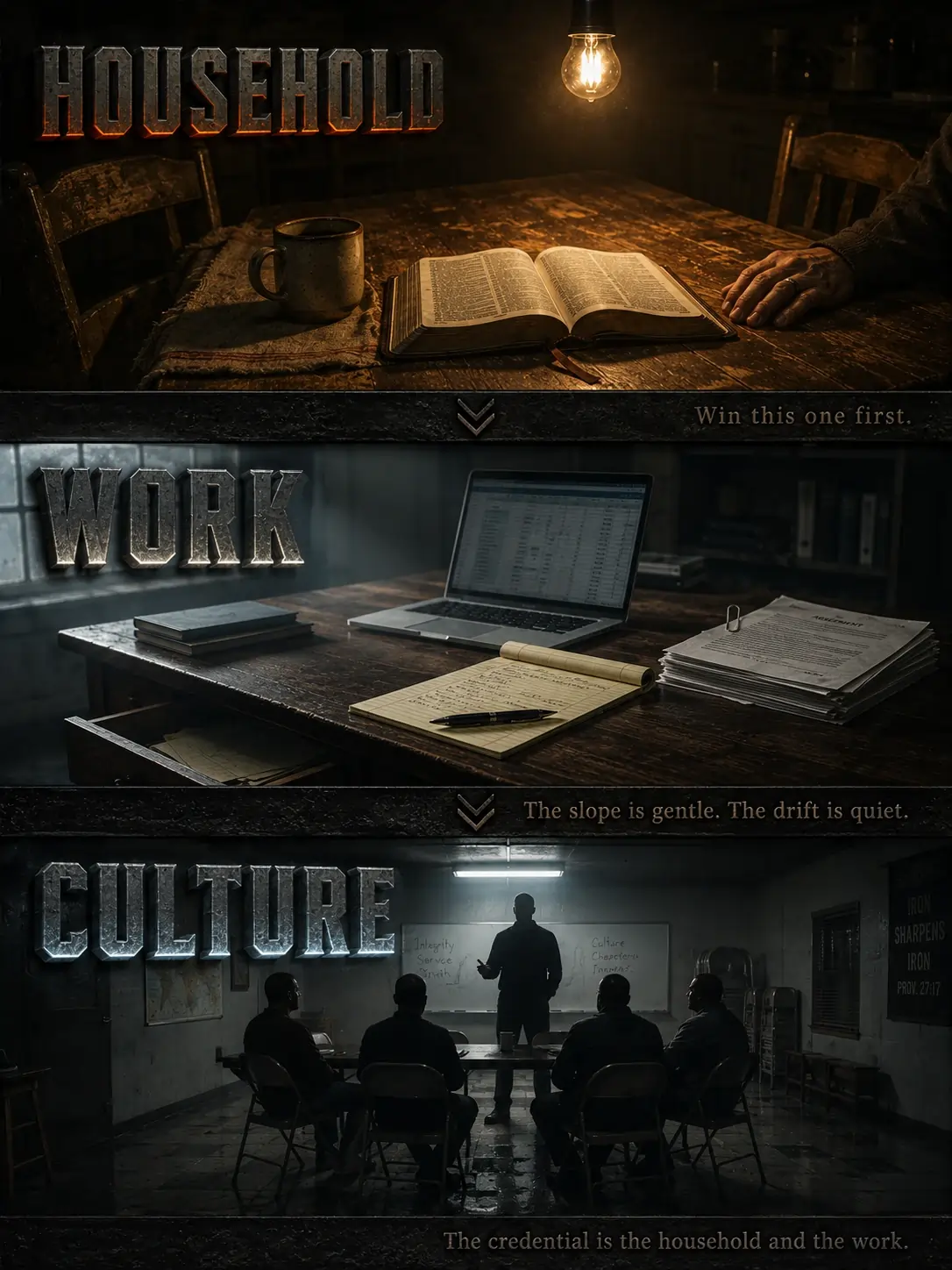
Battlefront 1: The Household
You will not be remembered by the people who mourn you for what you built at work.
Your wife will remember whether you were present and faithful or whether you used her as support staff for your career and your inner life. Your children will remember whether you led them to faith and modeled the kind of man worth becoming, or whether you were emotionally absent and theologically vague. Your closest friends, if you have any, will remember whether you let them in or kept them at conference-friendship depth.
This battlefront is unglamorous and repetitive. The conversation with your wife on Tuesday night that you do not want to have. The bedtime ritual you keep when you are tired. The phone you put away during dinner. The Bible you read out loud with your kids when you would rather collapse on the couch.
It is also the highest-stakes ground in your life. Lose it and nothing else matters. Win it, and you have done the most important thing a man can do. "One who is faithful in a very little is also faithful in much" (Luke 16:10). The man who is faithful in his household can be trusted with anything else. The man who is not should not be trusted with anything else.
Most leaders skip this battlefront because the wins are slow, the audience is small, and nobody applauds. That is exactly why God assigned it to you first.
Battlefront 2: The Work
Your work is not neutral.
Every business serves customers in a way that either honors them or exploits them. Every team is led in a way that either dignifies its members or grinds them down. Every product makes a moral statement about what is worth having. Every dollar is spent on something that builds or something that erodes.
Many Christian leaders have absorbed the lie that work is morally neutral and that only side projects (church work, missions, ministry) carry spiritual weight. That is theological nonsense. The whole creation is the Lord's. The whole working life is moral. "Whatever you do, work heartily, as for the Lord and not for men" (Colossians 3:23). There is no neutral commerce.
To fight on this battlefront is to lead and build as a man who knows that. In practice, it means:
- Tell the truth in meetings, including those where the truth is expensive.
- Refuse the deals, hires, and shortcuts that compromise your conscience, even when the optimization argument for them is strong.
- Build products that serve your customers' actual long-term good, not their short-term reactivity.
- Treat your team as image-bearers, not as a cost center to be trimmed.
- Steward profit as a tool, not as the point. Profit is not embarrassing. It is the proof that you created real value for real people who voluntarily paid for it.
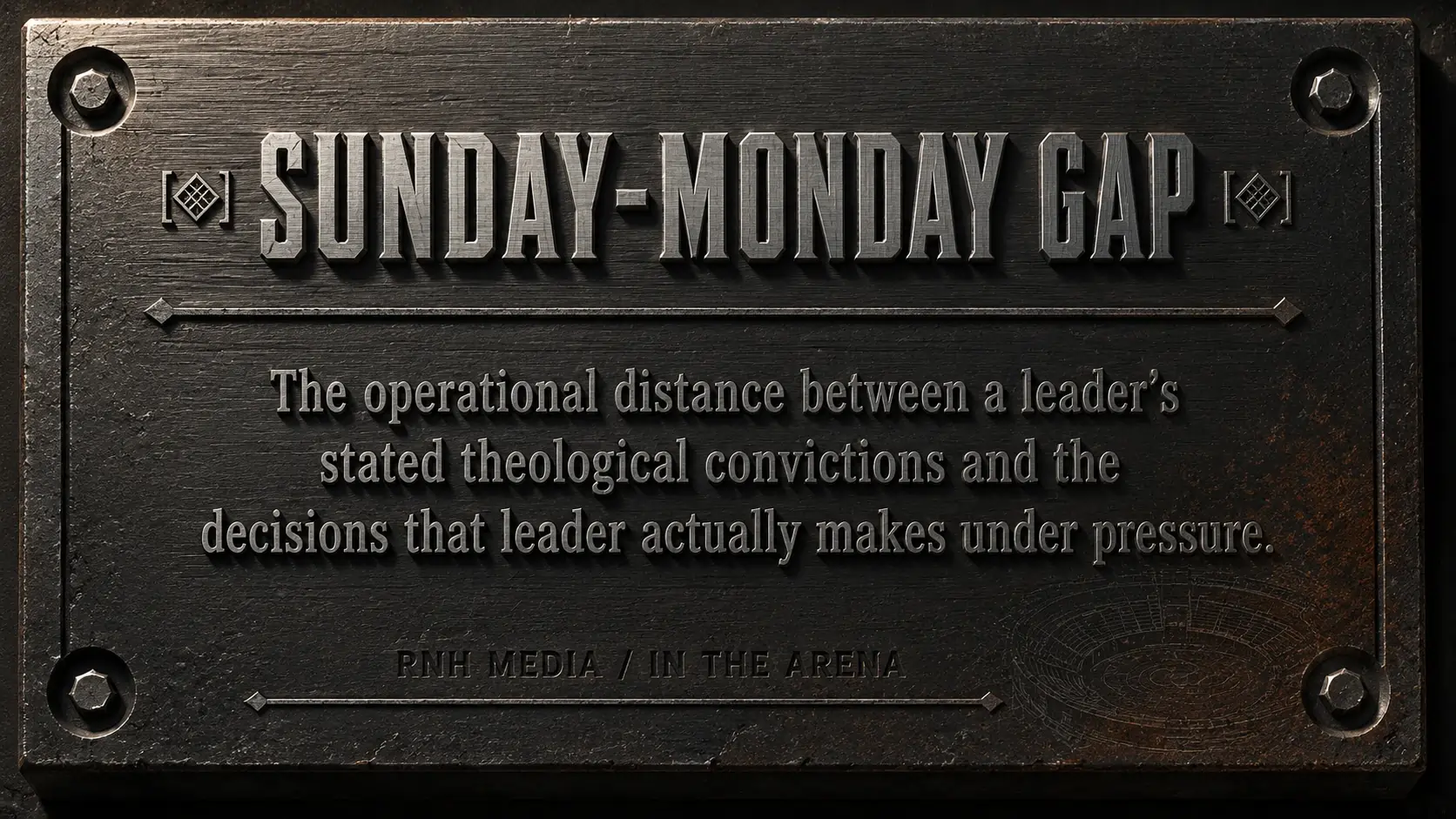
This is the arena most leaders are actively in, and the one most likely to compromise them quietly. The pressures are constant, the rationalizations are slick, the slope is gentle. This is where the Sunday-Monday Gap opens. The leader who never audits his work life will drift, even when no single decision breaks him.
Battlefront 3: The Culture
You do not have to be famous to fight here. You have to be present in the rooms you are already in with conviction.
The school board. The HOA. The local church. The investment committee. The men's group. The friend who said something at dinner that needs to be questioned, gently and clearly. Most cultural ground is taken or lost in those rooms, not on cable news. The man willing to stand up in a small room and say a true thing calmly, without apology, is doing more cultural work than the man with a podcast nobody at the school board has heard of.
This battlefront is dangerous in a specific way. It will cost you social standing. People will think less of you in real time. There is no applause line. The reward, if it comes, arrives in the long run, when the room slowly recognizes that the leader who said the unpopular true thing is the one they trust when something hard happens.
You cannot fight here without first taking the household and the work. A man who is not faithful to his wife has no business pronouncing on the culture. A man who exploits his employees has no standing to critique anything. The household and the work are the credentials. Culture is where credentials are spent.
What Are The Stands?
The stands are anywhere you can comment without risk.
Social media mostly stands. You can have an opinion about anything without ever standing in a room and defending it to someone who disagrees with you. You can build a following without building a life. You can sound like a leader without being one.
Christian celebrity culture largely stands. Some conference speakers and podcast hosts are also in the arena, doing real work. Many are not. They built a platform to comment on what people in the arena were doing, and it became their full-time activity.
Theological tribalism stands. Reformed sniping at Pentecostal. Liturgical sniping at the evangelical. Old-earth sniping at young-earth. Whatever your faction, the energy you spend defending its correctness is energy not spent in the arena where the actual work is.
Lifestyle Christianity stands. The vague spirituality that adds Christ to a comfortable life without rearranging anything. The Jesus-flavored personal brand. The faith that exists to be discussed but not lived.
The stands are not always evil. Some commentary is necessary. The danger is mistaking the stands for the arena, believing that having opinions about hard things is the same as doing hard things. It is not.
What Weapons Do You Fight With In The Arena?
You fight with three weapons. None of them are physical. All of them are real.
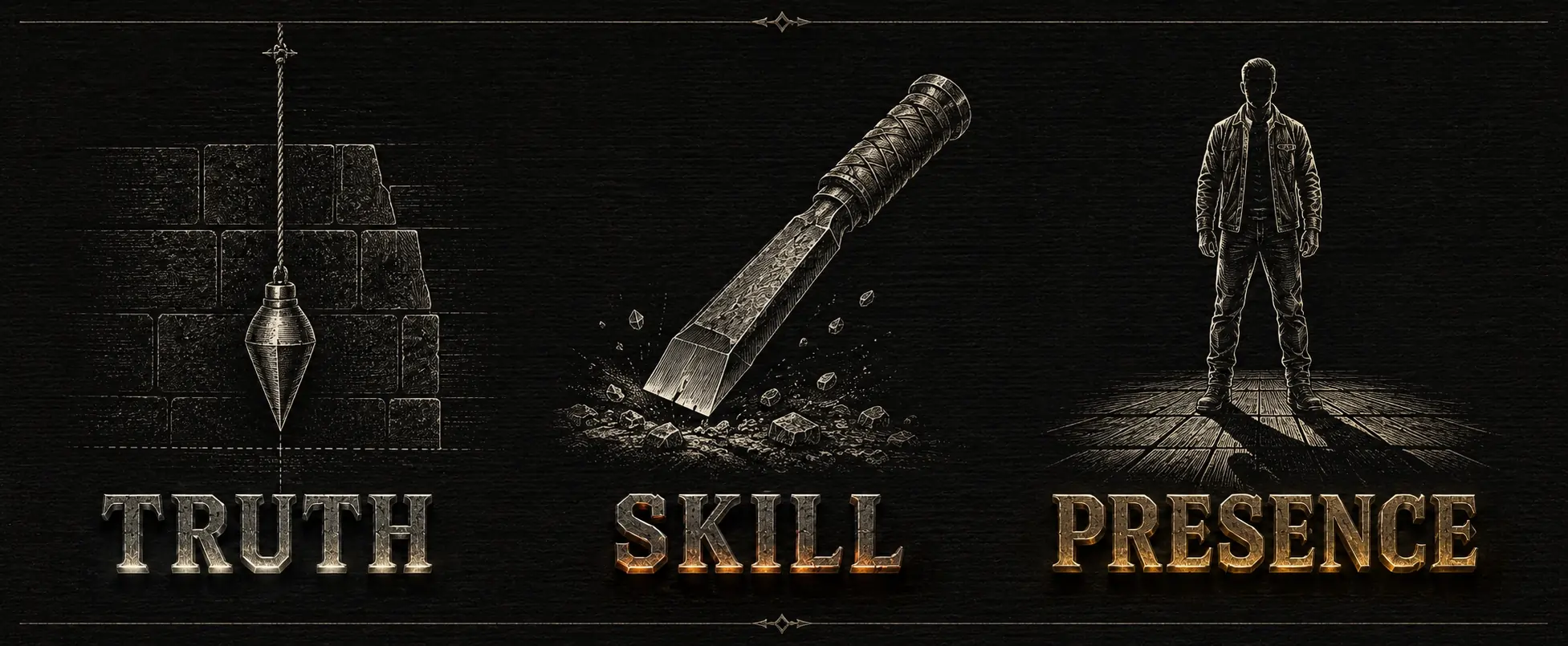
Weapon 1: Truth
The most underrated weapon a Christian leader has is the willingness to tell the truth, calmly, in rooms where the truth is unwelcome.
Most rooms run on polite lies. Performance metrics that are gamed. Cultural assumptions nobody questions. Spiritual platitudes nobody believes. Marriage scripts nobody is living by. The leader who tells the truth in those rooms breaks the spell.
Truth is not a weapon you wield to win. It is a weapon you wield to make reality visible. Once reality is visible, the right action usually becomes obvious to everyone present. You do not have to convince. You have to clarify. Tell the truth, calmly, without contempt, without performance, often. It is the most disruptive thing a leader can do in most modern environments, and it is the starting point for every other weapon.
Weapon 2: Skill
Conviction without competence is unconvincing. The Christian who tells the truth and then fumbles the work loses the next chance to be heard.
Be excellent at what you do—not optimized. Excellent. There is a difference. Optimization maximizes measurable output. Excellence does the work as if Christ is the customer, because He is. Excellence is the credential that earns you the right to fight in the arena. Without it, you are an opinion in an apron. With it, you are a force.
Build your skill on purpose. Read your craft's literature. Practice the boring fundamentals. Get a teacher. Do hard reps. Do not be the Christian who is comfortable with mediocrity because he assumed his faith would cover the gap. It does not. Your faith should make you the most skilled man in any room you are in, not the least.
Weapon 3: Presence
You cannot fight in the arena over Zoom. Some of it, sometimes. But the war is not won remotely.
Be present. In your home, with your family, eyes up and phone away. In your work, with your team, doing the actual work, not delegating the substance, and keeping the optics. In your community, in the rooms, taking your turn at the hard conversations.
Presence is the weapon that compounds. Every hour you are actually present somewhere, the trust you have built there grows. After ten years of present leadership in your home, your work, and your community, you carry an authority no platform can match. Most leaders try to substitute a platform for presence. The platform feels like reach, and it is, in some ways. But it cannot replace the slow accumulation of being there, day after day, where the work is.
What Does The Arena Cost?
The arena costs.
It costs you the comfortable distance of the stands. It costs you the easy approval of an audience that wants you to express their preferred opinion. It costs you the smooth career path that never asks you to risk anything. It costs you the certainty of always being right, because in the arena, you make real decisions and some of them turn out badly.
It sometimes costs you friendships built on shared spectatorship. When you step in, the spectators feel judged, even when you have said nothing. Some will turn on you. Some will quietly fade. The friendships that survive are the ones with people who are also in the arena, somewhere.
It costs you the option of staying invisible. The arena is visible. Other people will see you fail there. They will see you sweat. They will see your weaknesses. There is no clean version of arena life. The clean version is the standard.
That is the price. Pay it anyway.
What Is The Reward?
The reward is not applause.
The reward is that you will know, at the end of your life, that you did not waste it. You took ground in your home. You built work that mattered. You spent yourself on the rooms God put you in. You used your truth, your skill, and your presence the way they were meant to be used. You came to the end with scars instead of opinions.
The Lord, when you stand before Him, will not ask about your follower count. He will not ask about your professional credentials. "It is required of stewards that they be found faithful" (1 Corinthians 4:2). He will ask you about your stewardship.
The arena is where stewardship happens. "Fight the good fight of the faith" (1 Timothy 6:12). Get out of the stands. Step in.
Frequently Asked Questions
What does it mean to be a leader "in the arena"?
It means doing the hard thing when it costs you, instead of commenting on it from a safe distance. For a faith-driven leader, the arena is where your convictions meet your actual decisions across three battlefronts: your household, your work, and your culture. The stands are anywhere you can be right without risking anything.
What is the Sunday-Monday Gap in Christian leadership?
The Sunday-Monday Gap is the operational distance between a leader's stated theological convictions and the decisions that the leader actually makes under pressure. It opens quietly, most often on the battlefront of work, where the rationalizations are slick, and no single compromise feels decisive. The arena is where that gap gets closed.
Why do high-functioning Christian leaders quietly drift?
Because the feedback loop breaks midway through success, when the business functions and the family look stable from the outside, nothing forces a reckoning. Drift is rarely a dramatic fall. It is the slow erosion of a man who still checks every external box while becoming a stranger to himself.
How do Christian leaders integrate faith into business decisions?
By rejecting the lie that work is morally neutral. Every deal, hire, product, and dollar either honors people or exploits them. Integration means telling expensive truths, refusing conscience-compromising shortcuts, treating your team as image-bearers, and stewarding profit as a tool rather than the point. Faith governs the work, or it merely decorates it.
What does it cost to step into the arena?
It costs a comfortable distance, easy approval, a frictionless career path, and the certainty of always being right. It can cost friendships built on shared spectatorship. It costs invisibility, because the arena is visible and people will watch you fail there. The reward is a life you did not waste.
Next Steps
Most leaders are quietly conceding one of the three battlefronts and cannot say which. Find out.
Take the Drift Diagnostic minutes, no cost, an honest read on where you are losing ground. A man cannot close a gap he has not precisely located.
The Foundry is the membership for leaders building the structure and brotherhood that the arena requires. Forged, not fixed. "The crucible for silver, and the furnace for gold, and the Lord tests hearts" (Proverbs 17:3).
Subscribe to The Arena Letter for a Monday note from the field.
Ryan Nelson Holt is the founder of RNH Media and the author of In The Arena. He writes and coaches at the intersection of serious theology and executive decision-making, helping faith-driven leaders close the gap between conviction and execution. He created the 7F Framework and the Drift Diagnostic.
In the Arena. Always.
Last Update: June 2026